
The floods and thick mud that swept through Jangka District in Bireuen Regency, Aceh Province, may have receded. But for communities in seven affected villages—Ulee Ceu, Bungeng, Bugak Krueng Mate, Punjot, Pante Paku, Kuala Ceurape, and Alue Kuta—their impact is still deeply felt.
Where rice fields once stretched green and fertile, there are now layers of drying mud, cracked soil, and wild grass slowly taking over.
Fields that once sustained life now stand still.
Wild grass spreads across land that once buried hope.
And behind these fields are farming families still waiting for a way to start again.
According to the Bireuen Regency Agriculture and Plantation Office, at least 2,148 hectares of rice fields were buried under mud following floods that affected several areas, including Jangka District. The figure reflects not only environmental damage, but the scale of disruption to the livelihoods of thousands of farmers.
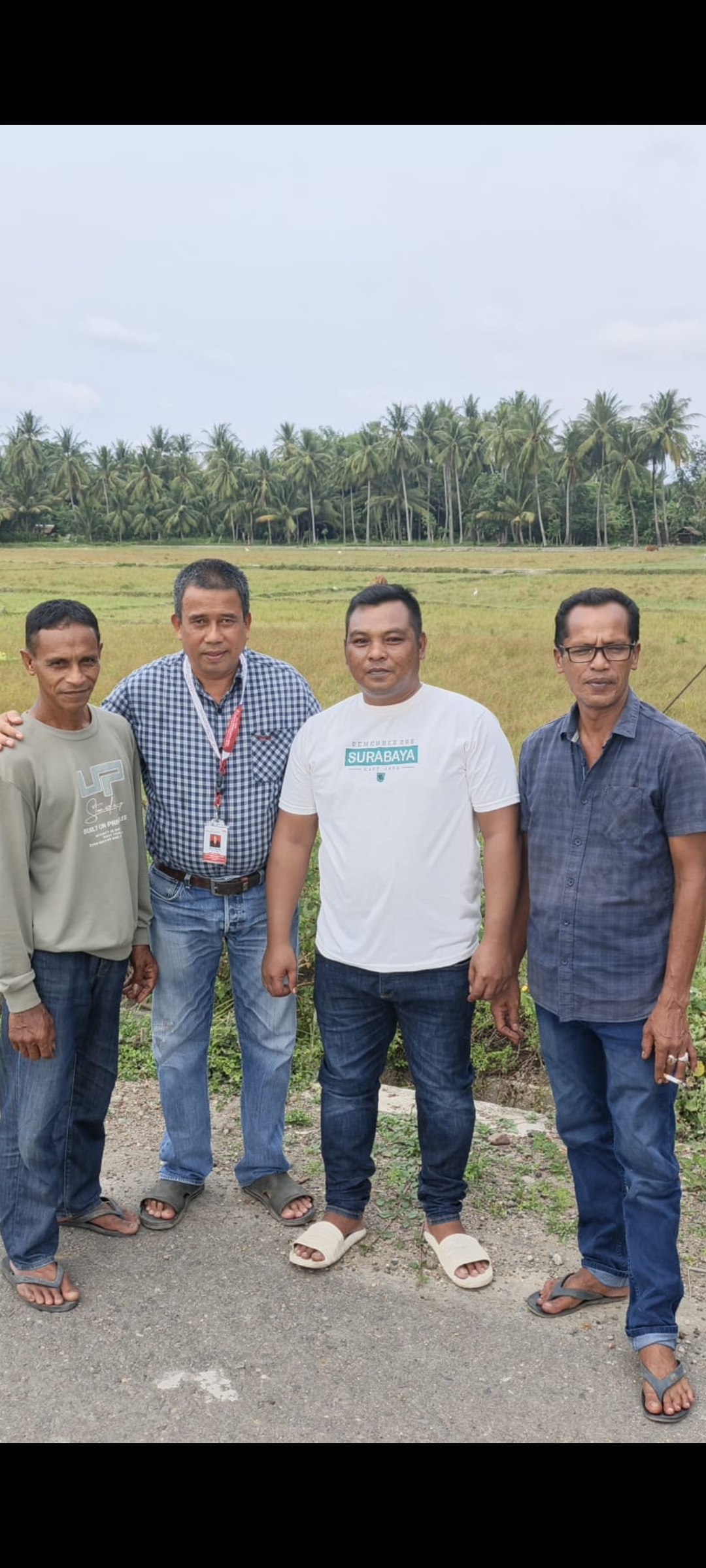
As part of early recovery efforts, a field survey was carried out over two days, from Thursday to Friday (23–24 April 2026), to see conditions on the ground first-hand.
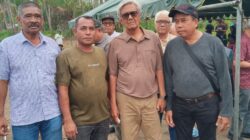
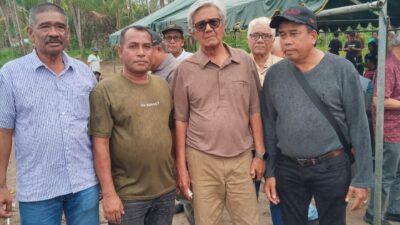
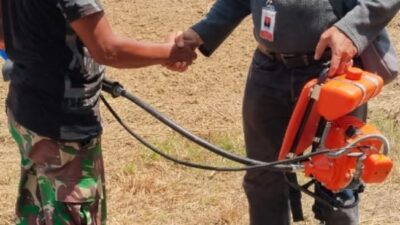
The survey was led by Arizal Mahdi, Chairman of Relawan Peduli Rakyat Lintas Batas, together with a team of volunteers and local village officials.
The initiative forms part of wider efforts to support national disaster response and recovery, aligned with coordination led by Badan Nasional Penanggulangan Bencana.
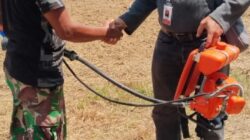
The team focused on mapping land conditions, identifying agricultural needs, and outlining early steps to help restore livelihoods through farming.
By visiting the sites directly, they assessed the level of damage, the challenges of recovery, and the potential to bring the land back into use.
For the people of Jangka, rice fields are more than just land.
They are a source of food, a means of paying for children’s education, and the backbone of family life.
When fields are buried under mud, what is lost is not only the harvest, but also income and a sense of security for the future.
One farmer from an affected village said he still visits his land every day, even though only dried mud and wild grass remain.
“It used to be green here. Now wild grass grows over the mud. If this continues, the land could die, and we don’t know how we will survive,” he said.
In response, Relawan Peduli Rakyat Lintas Batas has remained present beyond the emergency phase, continuing to stand alongside communities during the recovery period.
Arizal Mahdi said recovery must go beyond short-term aid.
“A disaster does not only damage homes and roads; it also destroys livelihoods. When fields are buried in mud and left to be overtaken by wild grass, it shows that time is passing while recovery is still incomplete. We are here to ensure there is a way forward for communities to stand again,” he said.
Based on the survey findings, the organisation is preparing an initial pilot project to cultivate maize as an alternative use of the affected land.
Maize has been chosen because of its relatively short growing period, its ability to adapt to recovering soil conditions, and its potential to help farmers earn income again.
However, the survey also found that some areas still require further work, including clearing mud deposits, providing quality seeds, fertiliser support, and ongoing technical guidance.
Without timely action, communities risk missing the next planting season.
For farmers, losing a single planting cycle can mean losing an entire year of livelihood.
For this reason, stronger collaboration is needed between local authorities, relevant agencies, and Badan Nasional Penanggulangan Bencana to accelerate agricultural recovery in the affected areas.
Post-disaster recovery is not simply about clearing mud.It is about restoring dignity.
It is about enabling people to stand on their own again.And it is about bringing back hope that was once buried.
On drying mud, the people of Jangka are planting hope once more.
Because for them, recovery is not a choice—it is a necessity.