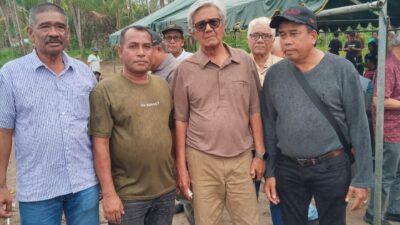

Bireuen, Aceh – Arizal Mahdi, Chairman of Relawan Peduli Rakyat Lintas Batas (Volunteers Caring for the People Across Borders), has called upon the Central Government to ensure that the development and management of the vast natural gas reserves in the Andaman Block are carried out in a fair, transparent, participatory, and sustainable manner, enabling the project to deliver the greatest possible benefits to the people of Aceh while strengthening Indonesia’s long-term energy security.
According to Arizal Mahdi, the discovery and development of Andaman Gas represent a historic opportunity and a tremendous blessing that could serve as a catalyst for economic transformation in both Aceh and Indonesia. However, the success of the project should not be measured solely by the scale of investment, production volumes, or state revenues, but by the extent to which its benefits are experienced by society, particularly communities living in the producing region.
“Andaman Gas is not merely an energy project. It is a test of our nation’s commitment to justice, prosperity, and equitable development, as mandated by Pancasila and the 1945 Constitution of the Republic of Indonesia,” Arizal Mahdi stated.
He explained that Article 33, Paragraph (3) of the 1945 Constitution clearly stipulates that the land, waters, and natural resources contained therein are controlled by the State and must be utilised for the greatest prosperity of the people. Consequently, the management of natural resources should generate economic added value, create employment opportunities, strengthen national industries, enhance human capital, and provide tangible and lasting benefits to local communities.
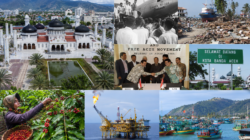
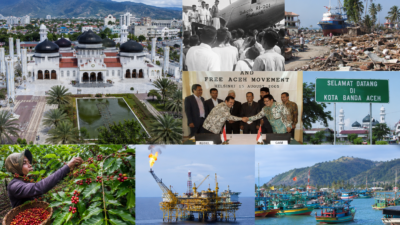
Arizal Mahdi further noted that Aceh’s historical experience offers valuable lessons. During the peak years of the Arun LNG industry, Aceh made a substantial contribution to Indonesia’s national economy. Nevertheless, many members of the public continue to believe that the benefits received by local communities were not fully commensurate with the wealth generated from Aceh’s natural resources.
“History must not be inherited as a wound. It should be embraced as a lesson for building a future that is fairer, wiser, and more dignified,” he said.
He emphasised that the people of Aceh do not oppose investment, development, or national interests. On the contrary, they strongly support initiatives that reinforce Indonesia’s position as a modern, self-reliant, and energy-sovereign nation.
At the same time, he stressed that all strategic policies concerning Andaman Gas must be founded upon open communication, constructive dialogue, and equal partnerships among the Central Government, the Aceh Government, investors, academics, community leaders, civil society, and all relevant stakeholders.
According to Arizal Mahdi, such an approach reflects the core values of Pancasila, particularly the principles of the Unity of Indonesia, Democracy Guided by Wisdom through Deliberation and Representation, and Social Justice for All Indonesian People.
Furthermore, Aceh possesses a special autonomous status guaranteed under Law No. 11 of 2006 on the Governance of Aceh, as well as the spirit of peace embodied in the Helsinki Memorandum of Understanding (MoU). Therefore, energy-sector development in Aceh should strengthen public trust, preserve social harmony, and generate broad-based benefits that are widely shared by the community.
On behalf of Relawan Peduli Rakyat Lintas Batas, Arizal Mahdi expressed hope that the development of Andaman Gas would stimulate the emergence of new economic growth centres, modern industrial zones, improved education and workforce training programmes, the empowerment of small and medium-sized enterprises, and expanded employment opportunities for the people of Aceh.
“The decisions we make today will determine what we leave behind for future generations. Will they inherit prosperity and hope, or unanswered questions from the past?”
He further emphasised that natural resources should not be viewed merely as economic assets but as a trust that must be managed responsibly for the welfare of the people.
“Within the values of religion, Pancasila, and our Constitution, every natural resource is a sacred trust. A trust is not measured by how much is extracted, but by how much benefit it brings to the people.”
In closing, Arizal Mahdi called upon all elements of the nation to make Andaman Gas a symbol of Indonesia’s success in managing its natural resources fairly, responsibly, and sustainably.
“Aceh is not asking for more than what is rightfully due. Aceh simply hopes that the mandates of Pancasila, the 1945 Constitution, the Helsinki MoU, and the Law on the Governance of Aceh are genuinely reflected in policies that prioritise the welfare of the people. Andaman Gas must become proof that Indonesia is capable of transforming natural wealth into justice, prosperity, and national unity.”
He concluded by emphasising that history should serve as a guide for the future rather than a burden from the past.
“History does not ask to be repeated; it asks to be learned from. Andaman Gas must become the meeting point between national interests and regional justice, between economic growth and public welfare, between development and human dignity. If this vision is realised, Andaman Gas will not only provide energy for Indonesia but will also inspire hope for generations to come.”
Relawan Peduli Rakyat Lintas Batas believes that Andaman Gas should stand not only as a strategic national energy asset but also as a model of fair, inclusive, and sustainable natural resource governance that benefits both Aceh and Indonesia as a whole.